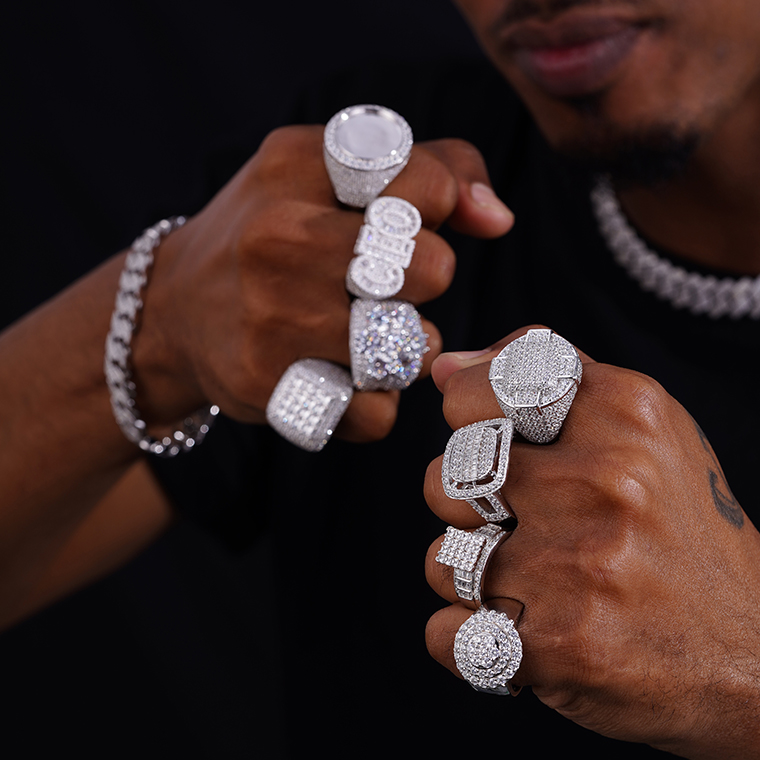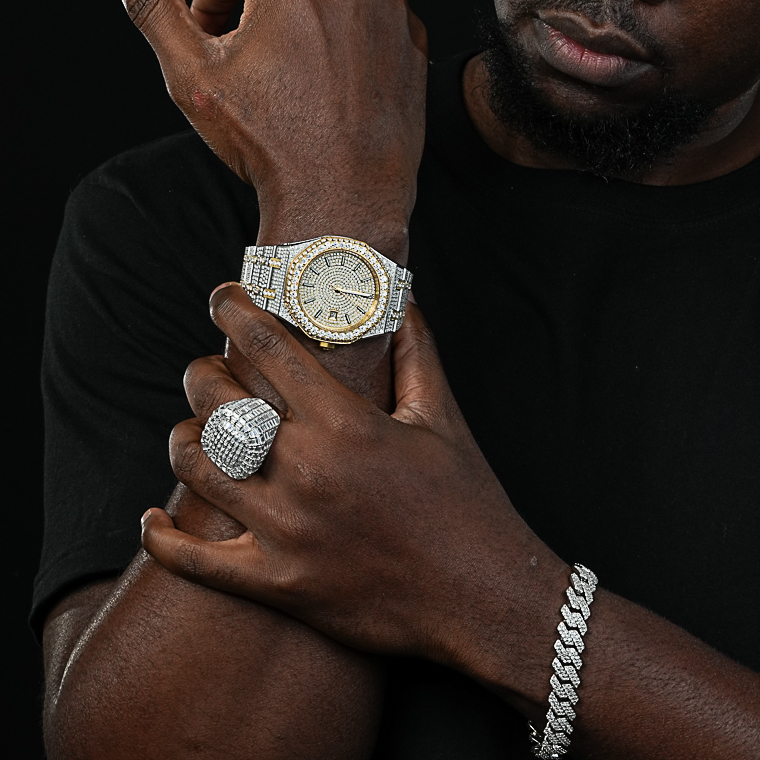






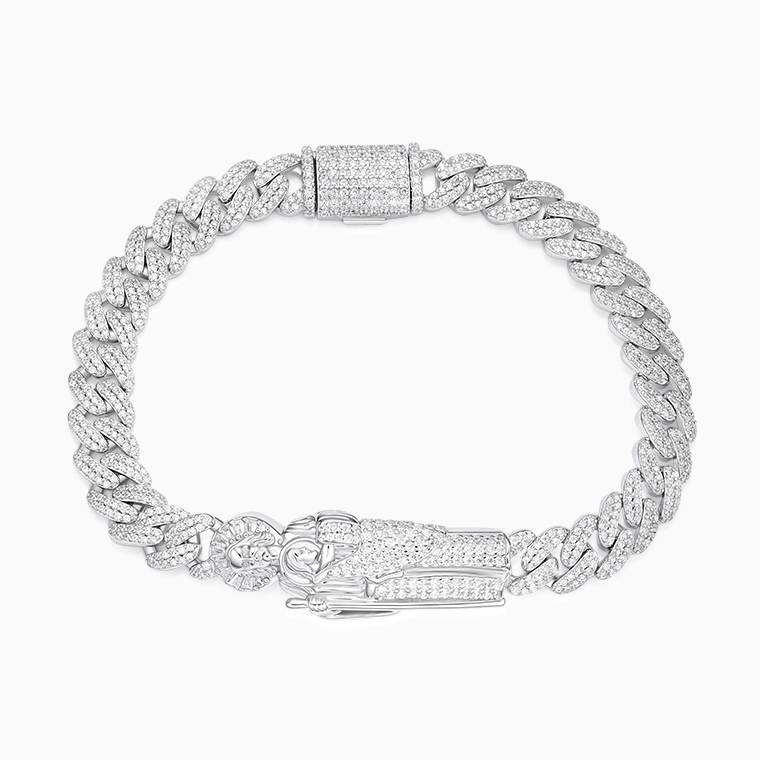
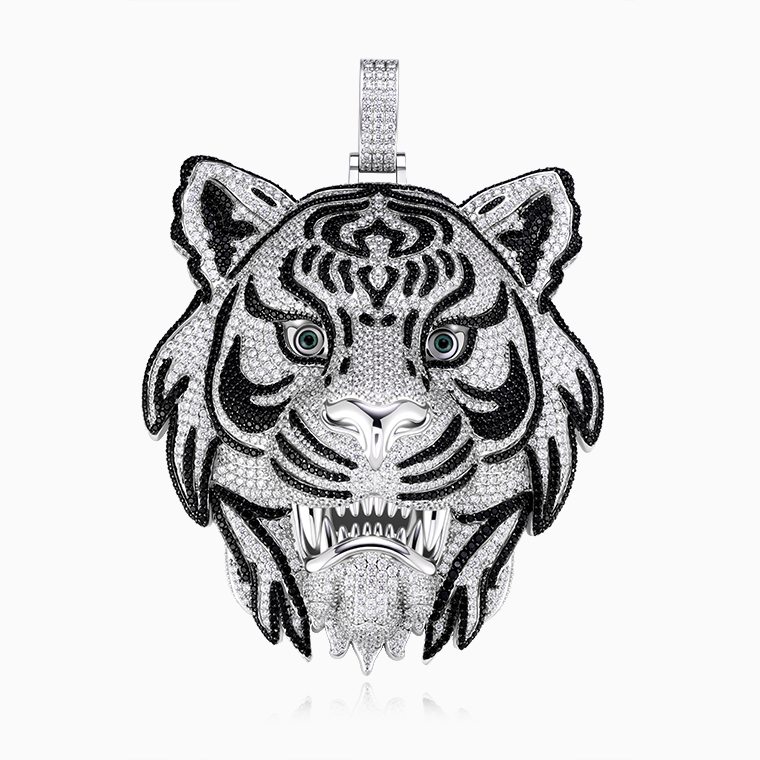

For a wholesaler in the United States or Europe, sourcing 925 silver hip hop jewelry is not simply a matter of finding attractive products at a competitive factory price. The goods must arrive as described, perform well in everyday use, meet the expectations created by the product listing, and remain consistent when it is time to reorder.
A chain that looks excellent in a supplier’s video may feel too light in person. A pendant marked “925” may still require material verification. A gold-colored finish may photograph beautifully, yet produce returns if customers were led to believe it would never wear.
These issues affect more than product quality. They influence landed cost, customer service, inventory planning, brand reputation, and the ability to build a stable wholesale range.
Why 925 Silver Fits the Mid-to-Premium Market
Sterling silver is widely recognized by Western consumers. It has a clearer material identity than base-metal fashion jewelry while remaining more accessible than solid gold.
That positioning makes it useful for hip hop jewelry. Retailers can offer substantial-looking chains, iced-out pendants, bracelets, rings, and earrings at prices that sit between entry-level brass products and fine jewelry.
Silver is also workable enough for detailed production. It can be cast into custom forms, soldered, engraved, polished, plated, repaired, and used for dense stone settings. This flexibility suits the visual language of hip hop jewelry, where bold shapes often need to coexist with fine lettering, small pavé stones, and custom clasps or bails.
The material is not maintenance-free. Sterling silver can tarnish, scratch, or bend when a component is designed too thinly. Plated silver will experience surface wear. A serious wholesale program should account for these characteristics in product design, retail descriptions, packaging, and care instructions.
Material Claims Need Supporting Detail
A “925” stamp is helpful, but it is not a complete material-control system. The wholesaler should ask how the supplier checks silver content and whether appropriate documentation can be provided for the order.
The product specification should identify the base metal separately from the finish. These descriptions are not interchangeable:
- 925 sterling silver
- 925 sterling silver with yellow-gold plating
- Gold-plated brass
- Solid gold
The distinction matters when preparing invoices, product pages, marketplace listings, and customer-service policies.
Testing and labeling requirements vary by market and product category. A US or European buyer should determine which standards apply to the destination country and the intended customer group, then discuss the relevant material controls with the supplier before production. A generic report from an unrelated product or an old batch should not automatically be treated as evidence for a new order.
Weight and Construction Affect the Customer’s First Impression
Western consumers often evaluate a silver chain by feel as much as appearance. Weight is not a perfect measure of quality, but an unexpectedly light product can create an immediate impression that the jewelry is cheaply made.
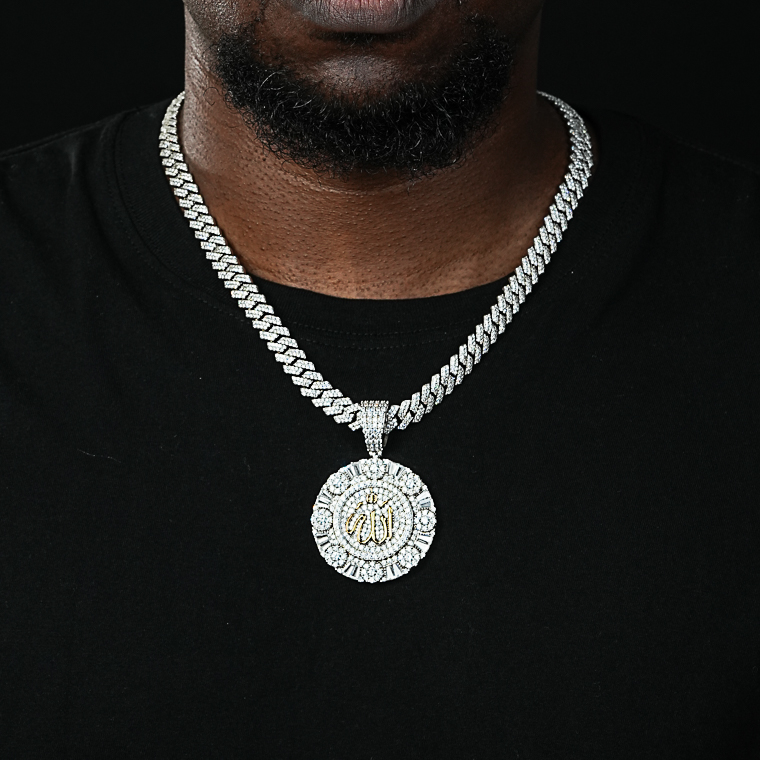
This is particularly important with Cuban chains and large pendants. Two products may share the same visible width while using different amounts of metal. Hollow, semi-hollow, and solid constructions will produce different weights, costs, and wearing experiences.
The quotation should state the expected finished weight and a reasonable tolerance. Ask whether that figure comes from an existing piece, a physical sample, or a CAD estimate. Once a sample has been approved, its actual weight should become part of the production reference.
For a pendant, consider how the weight relates to the chain. A substantial pendant on a lightweight chain may look unbalanced and place unnecessary strain on the connector. The bail opening must also accommodate the chain’s end cap, which is often wider than the links themselves.
Build the Range Around Real Buying Behavior
A wholesale collection does not need to begin with the biggest and most elaborate products.
Small pendants, stud earrings, narrow bracelets, and lighter rings give customers an accessible entry point. Tennis chains, medium-width Cuban bracelets, and standard-sized iced-out pendants can form the commercial center of the range. Heavier silver chains, moissanite pieces, and custom designs can occupy the upper tier.
This structure is helpful for retailers because customers rarely enter the category at the same price level. Some are making an impulse purchase; others are looking for a central statement piece. A few may want a custom item with personal or brand significance.
Established forms such as crosses, letters, tennis jewelry, and classic Cuban links generally deserve more inventory than highly specific novelty designs. Trend pieces can still attract attention, but a first order should keep their quantities controlled.
Actual sales will reveal whether the market prefers white, yellow-gold, rose-gold, or black finishes, as well as which chain lengths, ring sizes, and stone options deserve deeper stock.
CZ and Moissanite Serve Different Price Points
Both cubic zirconia and moissanite can be used in 925 silver hip hop jewelry, but they should not be presented as equivalent materials.
CZ helps keep the finished price accessible and works well for large, stone-covered surfaces. Moissanite usually supports a higher retail position because of its durability and distinctive optical performance.
A wholesaler can use this difference to create related product tiers. A silver-and-CZ pendant may serve the core range, while a silver-and-moissanite version offers an upgrade without requiring a completely different design.
The specification should state the stone type, shape, millimeter size, and expected matching standard. If the jewelry contains several stone sizes, each should be recorded. Any identification documents or gemstone reports should be discussed before ordering rather than assumed to be included.
Stone setting also needs attention. Dense pavé may look impressive under bright lighting while hiding uneven rows or stones set at different heights. Close side views and a slow product video are more useful than another front-facing promotional image.
Approve a Representative Sample
A wholesale buyer should avoid approving bulk production from photographs alone.
The sample should use the same silver, stones, setting method, plating, clasp, and packaging planned for the order. A brass sample is not a reliable production standard for a silver item, even when the external design is identical.
When the sample arrives, measure and weigh it. Lay chains flat and check whether the links twist. Open and close the clasp several times. Inspect the back of pendants, the internal areas between links, the stone rows, and the point where the bail connects to the body.
Wear the sample if possible. A tennis chain that looks balanced in a tray may flip on the neck. A pendant may tilt forward once it is placed on the intended chain.
Record any changes on a drawing or photograph. Once the sample is approved, keep it with a final specification covering the dimensions, weight, metal, stones, finish, hardware, branding, packaging, and inspection requirements.
Plating Claims Should Be Realistic
Yellow-gold, rose-gold, white, and black finishes can give a silver collection several different identities. They are also a common source of customer complaints when expectations are not managed correctly.
Plating is a surface treatment. Friction gradually affects it, particularly on ring edges, clasps, pendant backs, and raised sections of a chain. Perspiration, cosmetics, climate, cleaning habits, and frequency of wear can accelerate the process.
A supplier should explain how plating color is controlled and whether later production will be matched to an approved sample. When plating thickness is part of the agreement, it should be written into the specification and connected to an inspection method.
Retail descriptions should avoid absolute promises such as “never fades.” It is more accurate to identify the base metal and finish, then provide practical care advice. Clear wording protects the retailer as well as the customer.
Think Beyond the Factory Price
US and European wholesalers ultimately pay for a saleable product delivered into inventory, not merely a factory unit.
The total cost may include:
- Product development and CAD work
- Molds and samples
- Custom engraving or branding
- Packaging and labels
- Material or product testing
- Pre-shipment inspection
- Freight and insurance
- Import-related costs
- Payment charges
- Local repairs, returns, and replacements
A lower quotation may reflect a lighter silver weight, a simpler clasp, reduced stone coverage, thinner plating, or basic packaging. These may be reasonable commercial choices, but they need to be visible before prices are compared.
Repeat consistency also has financial value. If a second batch arrives in a different gold tone or with a noticeably lower weight, the wholesaler may need to reshoot products, revise descriptions, or explain the change to existing customers.
Quality Control Should Follow the Product Through Production
Final inspection is important, but some problems need to be caught earlier.
Material should be checked before or during production. Castings need to be examined for incomplete areas and structural weakness. Stone work should be reviewed before and after polishing and plating. Clasps and moving links require functional checks. Finished goods need confirmation against the approved sample.
The exact procedure will depend on the design. A plain silver ring, a tennis chain, and a large moissanite pendant do not have the same inspection priorities.
Before production, the buyer and supplier should agree on measurable criteria: dimensions, weight tolerance, stone security, finish, clasp operation, logo placement, packaging, and the treatment of defective goods.
It is also sensible to define the claims process. How long will the buyer have to inspect the shipment? What evidence will be required? Will problems be handled through repair, replacement, refund, or credit? A minor loose stone and a batch made in the wrong metal need different remedies.
Reordering Is the Real Test of a Supplier
A strong first sample is encouraging. A stable second and third order are more valuable.
Before launching a product, ask whether the same clasp, stone sizes, plating color, and packaging will remain available. If a component needs to change, the supplier should obtain approval before production.
Keep one master specification for each important SKU. It should reflect the latest approved version rather than a collection of instructions spread across emails and chat messages.
For private-label products, clarify ownership and use of artwork, CAD files, molds, samples, and product photography. If exclusivity matters, it should be documented rather than assumed.
What Western Buyers Should Expect From a Manufacturing Partner
A capable 925 silver hip hop jewelry supplier should help the buyer move from an idea to a repeatable product. That requires more than access to a large catalog.
The manufacturer should be able to review a design, identify production risks, prepare a representative sample, document the approved construction, manage the relevant inspections, and preserve the information needed for later orders.
This is where Shining Star Jewelry’s working model is relevant. The company connects professional CAD development with wax production, casting, stone setting, polishing, plating, and quality inspection. Buyers can submit a logo, drawing, existing product, or reference image for a feasibility review before committing to bulk production.
Its manufacturing resources also support material analysis, stone-security assessment, plating-related inspection, and production tracking. Not every project requires every available test, so the appropriate controls are confirmed according to the product and order.
For US and European wholesalers, that connected process addresses a practical concern: the product approved during development should remain recognizable when it reaches bulk production and later reorders.
Shining Star’s role is not simply to offer another collection of 925 silver chains and pendants. Its value lies in helping buyers turn dimensions, materials, stones, finishes, branding, and inspection requirements into a product specification that can actually be manufactured and repeated.
A successful wholesale partnership begins with a clear brief. When the buyer defines the market, target price, product dimensions, stone choice, finish, quantities, packaging, and destination, an experienced manufacturing team can give more useful guidance on construction, sampling, cost, and production.
That level of clarity is what allows 925 silver hip hop jewelry to move from an attractive factory sample to a dependable retail collection.